Back
Work experience works – with youth worker support
3 March 2026
- Uncategorised
“I feel every young person should have this opportunity”
– Hatch Youth Employabiliy Programme participant
957,000 young people are not currently in education, employment or training in the UK, a number that continues to rise year on year. While the reasons behind these concerning figures are complex, pointing to the compounding challenges young people face in accessing work, at UK Youth we have found an effective route into employment – supported work experience. In fact, the impact of youth worker support during work experience can be life-changing for young people.
Too many young people in the UK are stuck in the catch-22 of needing experience to be given a job – but needing a job to get some experience. In fact, almost 1 in 2 young people feel that a lack of work experience is a barrier to employment.1 However, too many young people have damaging experiences at work – 93% of young people have experienced negative treatment on the job because of their age.2
Routes to work – UK Youth’s findings on youth work support
Young people need someone in their corner who has the time, knowledge and connections to make a real difference. Work taster programmes, supported by youth workers, can tackle key challenges in youth employment by making accessing – and persevering with – a work placement possible. A youth worker supports a young person through roles as an informal educator, mentor, coach, guide, advocate and champion. This is vital for young people navigating one of the most difficult job markets in decades, especially for those disproportionately affected due to social inequalities.3
UK Youth’s Hatch employability programme provided over 1,200 young people with a paid work experience placement alongside employability training, ongoing youth worker support and ultimately a guaranteed interview for a real job.
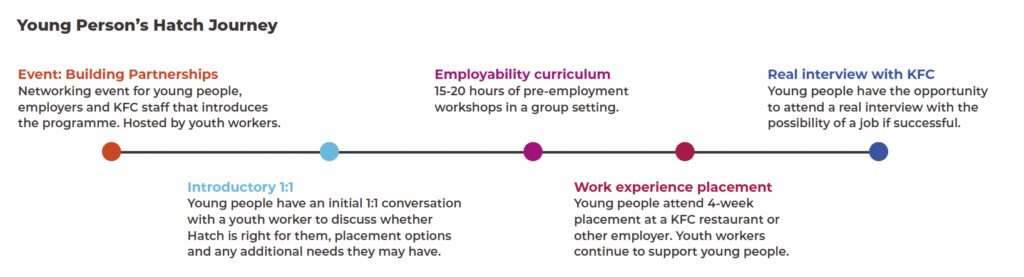
Delivered over three years and funded by KFC, the programme reached young people in need of a helping hand – only 18% of participants were in education, employment or training at the start of the programme. However, three months after completing Hatch an incredible 66% of participants were in employment , education or training. Our latest report reviews the three years of the programme and presents findings and practical tips on delivering work experience programmes through youth work. Overall, 71% of young people improved their employability skills while on the programme.
Next we summarise the key support youth workers offer young people and employers.
Preparing young people for work
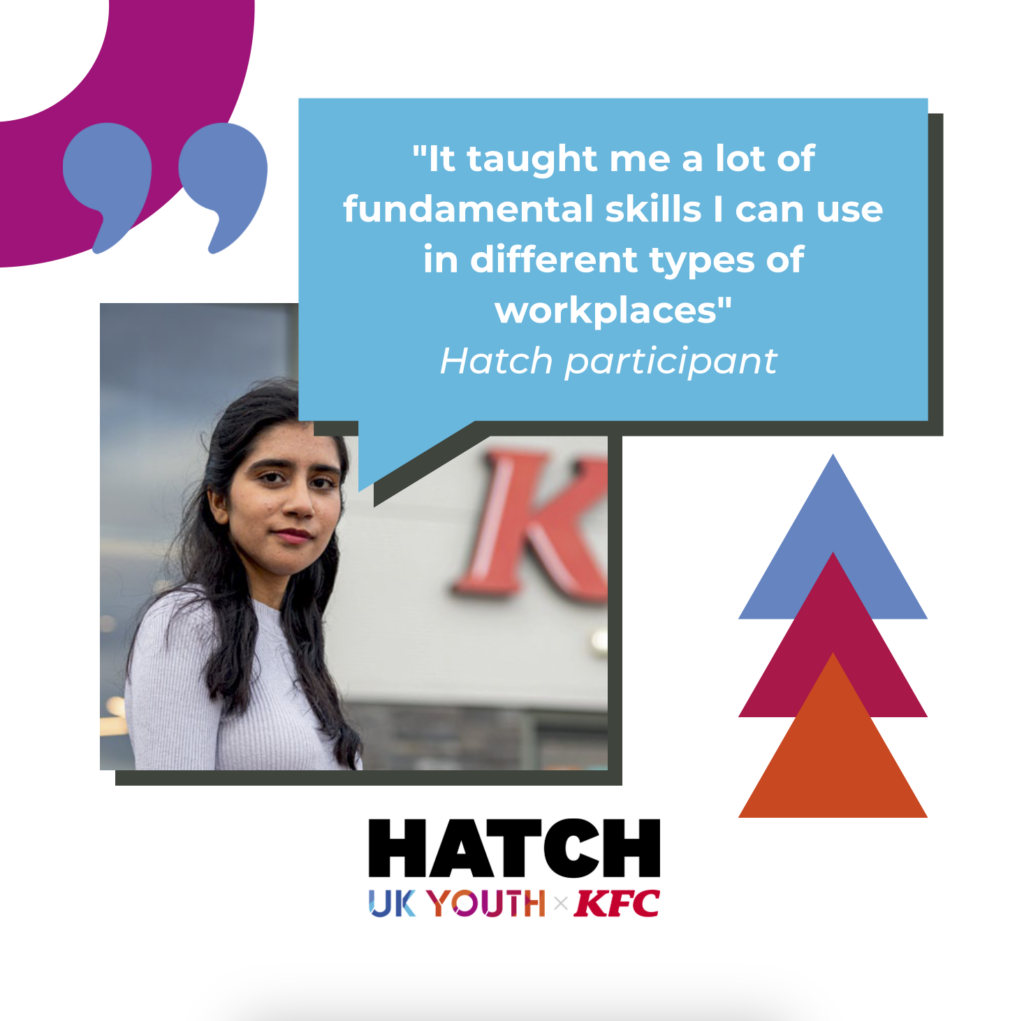
“prepared me for real work” – Hatch employability programme participant
The support from youth workers helped to prepare many young people for what would be expected from them at work.
- The employability curriculum introduced topics such as preparing for job seeking, navigating the workplace and mock interviews.
- A safe space to discuss worries about the world of work helped young people feel more comfortable starting the placement.
- Guidance and practical help with issues beyond the work day – such as travel anxiety and Right to Work documentation – gave more young people a chance of success.
Keeping young people in work
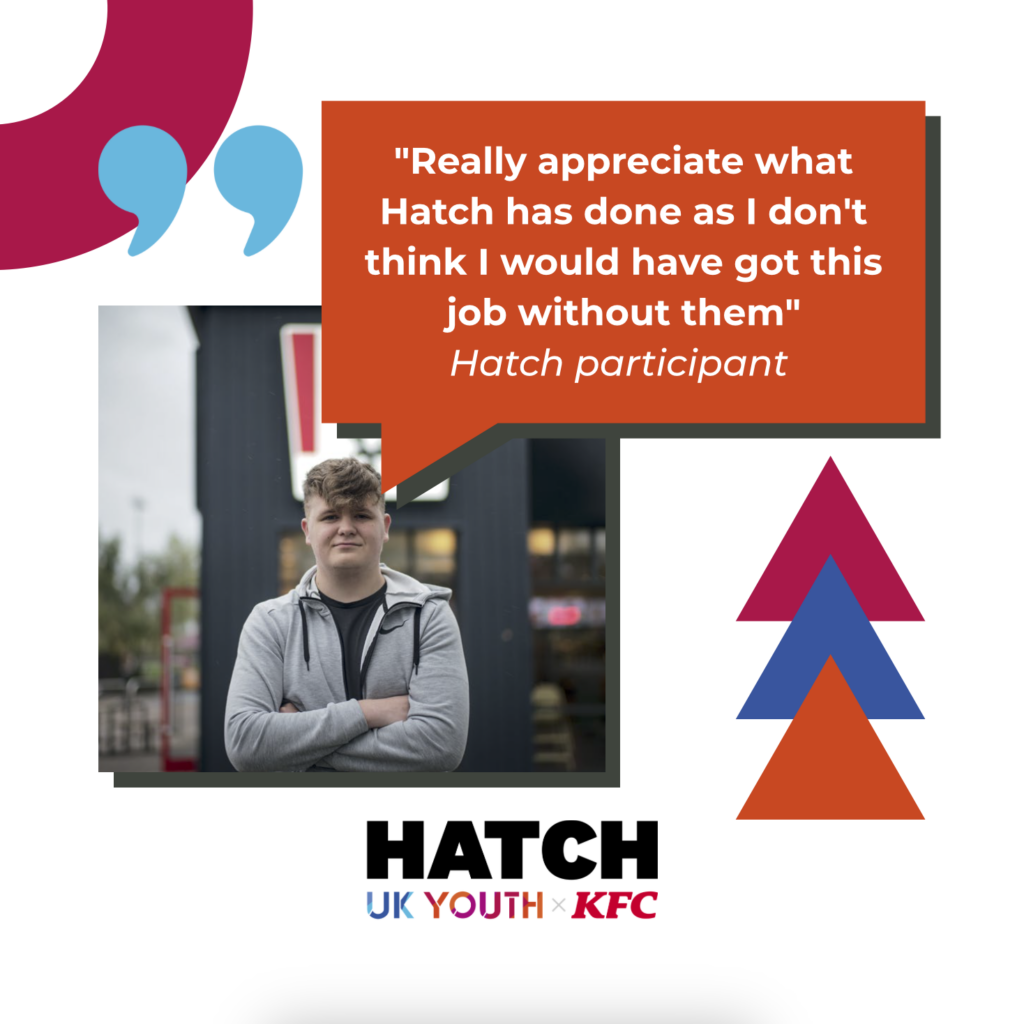
“helped me massively to get back into work” – Hatch Employability Programme participant
Youth workers were also key in supporting young people during their work placement. This can be the difference between a young person dropping out from an opportunity and seeing it through all the way to the job interview and on to a permanent job.
- The informal education environment provided space to develop socioemotional skills that are so key for succeeding at work.
- Improving self-confidence and resilience before the placement provided stronger foundational skills and attitudes.
- Coaching young people and advocating for hem with employers can help to overcome small issues that might otherwise lead to a young person dropping out or compound and reach the level of dismissal.
Youth workers supporting employers
Youth workers can also act as a valuable link between employers and young people. Employers can struggle to offer work experience placements as they feel they do not have the time or resources to provide a meaningful experience.4 In 2022 only 3 in 10 employers had provided any work experience in the last 12 months.5
- Youth workers have the background knowledge of a young person’s experiences and circumstances that can help employers understand required support and accommodations.
- Youth workers can provide insights on young people’s preferences, needs and behaviour and support young people to communicate with their employer.
- Youth workers can help employers beyond a single placement period as they can suggest ways of recruiting, engaging and supporting young employees, leading to increased retention.
Expanding supported work experience opportunities
Hatch provided a stepping stone into work for 1,200 young people between 2022 and 2024, demonstrating youth workers are a vital part of the employment support system. Since then, the scale of this work has grown. Our Summer Jobs Programme is now recruiting employers of any size and sector to provide work experience placements for 900 young people over the summer of 2026. Please complete an expression of interest and a member of our team will get back to you!
👉 Read the full Hatch report here.
To hear more about UK Youth’s employability learning and how youth workers are helping young people access their dream jobs, join our next Network Session in March. Keep an eye out for the sign-up link via our newsletter and socials!
1 Youth Employment UK, 2025
2 UK Youth and KFC, 2024
3 Social Mobility Commission, 2026
4 IFF Research for Department for Education, 2023
5 IFF Research for Department for Education, 2023